

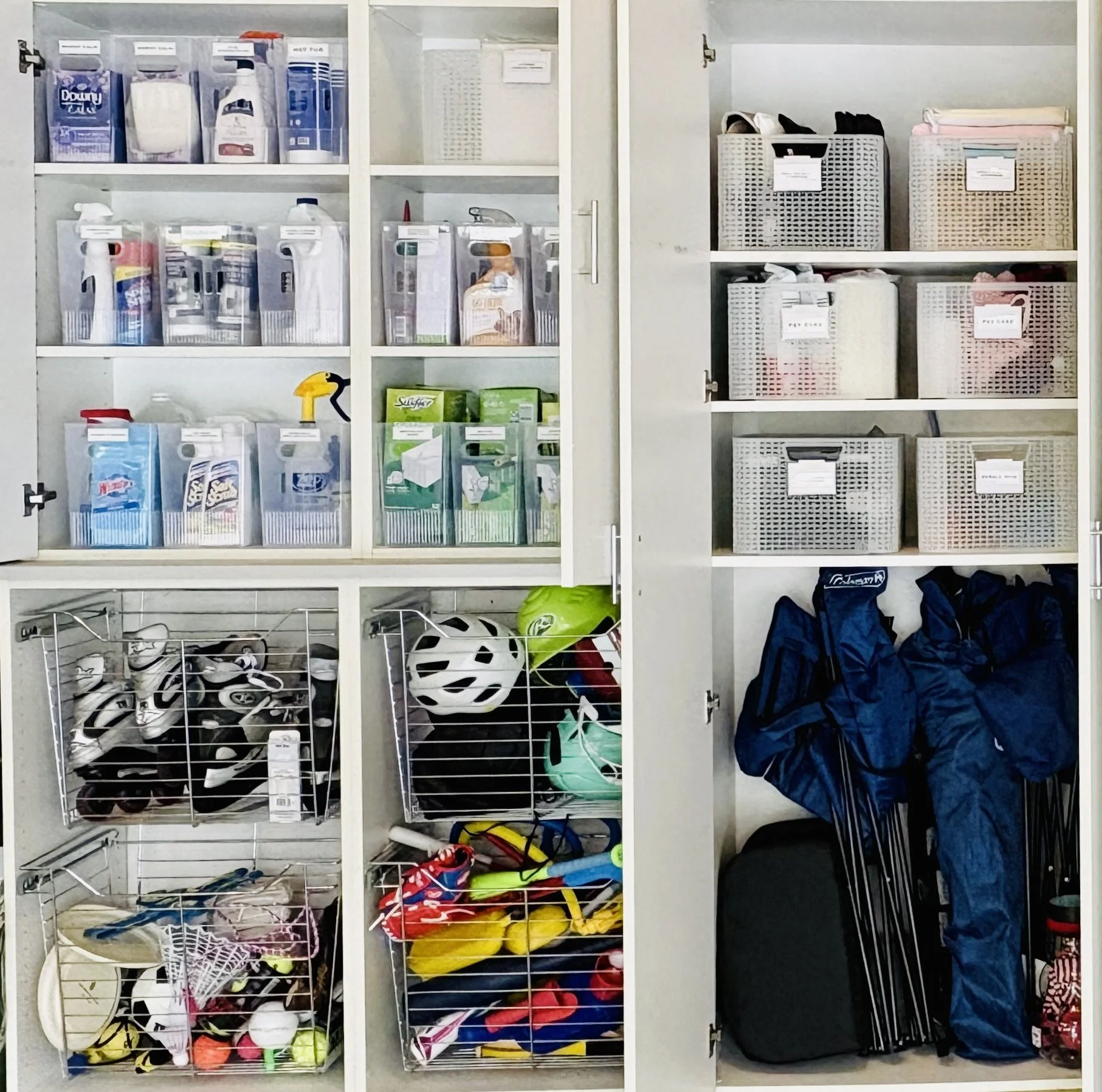
Cleaning supplies up top, sports gear down low where kids can reach it, and a label on everything in between.
By early August, most garages in MetroWest are telling the story of summer.
Beach chairs leaning against the wall. Pool noodles wedged behind the bikes. A cooler with a little sand still in the bottom. Three bottles of sunscreen, none of them full. Lacrosse sticks, soccer balls, and a scooter that someone swears they still ride. And somewhere in there, a car that hasn't been parked inside since June.
If that sounds familiar, I promise you're not alone. The garage works hard all summer, and it rarely gets any thanks.
Late summer is a wonderful time to give it a reset. The long days are still here, fall sports are about to start, and before you know it, you'll want room for the car before the first snowfall. This is what I do.
Why the Garage Matters More Than You Think
For many families, the garage isn't just storage. It's the real front door.
It's where everyone comes and goes. It's where backpacks, sports bags, shoes, and groceries enter the house. When the garage works, mornings go more smoothly. When it doesn't, the chaos follows everyone inside.
That's why I think of the garage as part of the house, not an afterthought.
Start With a Clear Morning
A garage is a big project, so give it a real block of time. A Saturday morning with good weather is perfect.
Pull everything out onto the driveway, or work one wall at a time if that feels more manageable. As you go, sort into a few simple groups:
Keep, grouped by category
Pass along to friends, family, or a younger neighbor who could use it
Donate
Recycle
Special disposal, such as old paint, chemicals, and batteries. Many towns hold a household hazardous waste day, so check your town's website before tossing any of these.
This is also the moment to be honest about outgrown gear. The tiny bike with training wheels, the cleats from two sizes ago, and the sled no one has used since the kids were in elementary school could make another family very happy.
Think in Zones
Once you know what you're keeping, give every category its own zone. A few zones that work well for most families:
Sports and play: balls, helmets, sticks, rackets, and bikes
Seasonal: beach gear, snow gear, holiday decorations, and picnic supplies
Tools and projects: hand tools, hardware, and painting supplies
Car and outdoor: car care items, gardening tools, and the hose
Household overflow: paper towels, extra water, and bulk supplies
Drop zone: shoes, backpacks, and bags, right by the door into the house
The drop zone is the one I care about most. If shoes and backpacks always land by the door, give them a home right there. I talk more about working with where things naturally land in my post on ADHD-friendly home organization, and it applies to every family.
Get Things Off the Floor
The floor is the most valuable real estate in a garage, and it tends to disappear first.
Wall systems, hooks, and shelving can change everything. Bikes can hang vertically. Rackets, sticks, and bags can hang on hooks. Heavy bins can live on sturdy shelving, and seasonal items that you only need once a year can go up high, on overhead racks if you have them.
When things are off the floor, the garage feels bigger, cleaning is easier, and the car has a fighting chance of getting back inside.
Put Kids' Gear at Kid Height
If you want kids to put their own things away, make it easy for them.
Helmets, balls, scooters, and sports bags belong low, where kids can reach them without climbing or asking for help. Wire baskets and open bins are perfect for this. Balls can simply be tossed in, and nobody has to fiddle with a lid.
The higher shelves can hold the things adults are in charge of, like cleaning supplies, tools, and anything you would rather little hands not reach.
Use Bins You Can See Into, and Labels That Make Sense
For most garage storage, I love clear bins or open containers. When you can see what's inside, you're much more likely to find it, and much more likely to put it back.
For bigger, opaque bins, labels are essential. Keep them simple and obvious: Snow Gear. Beach. Water Toys. Picnic Blankets. Paper Goods.
A word of honesty: most garages end up with a Miscellaneous bin somewhere. It isn't a crime. Just try to keep it small and check it every season, because Miscellaneous has a way of quietly becoming a second garage.
Plan for the Seasonal Swap
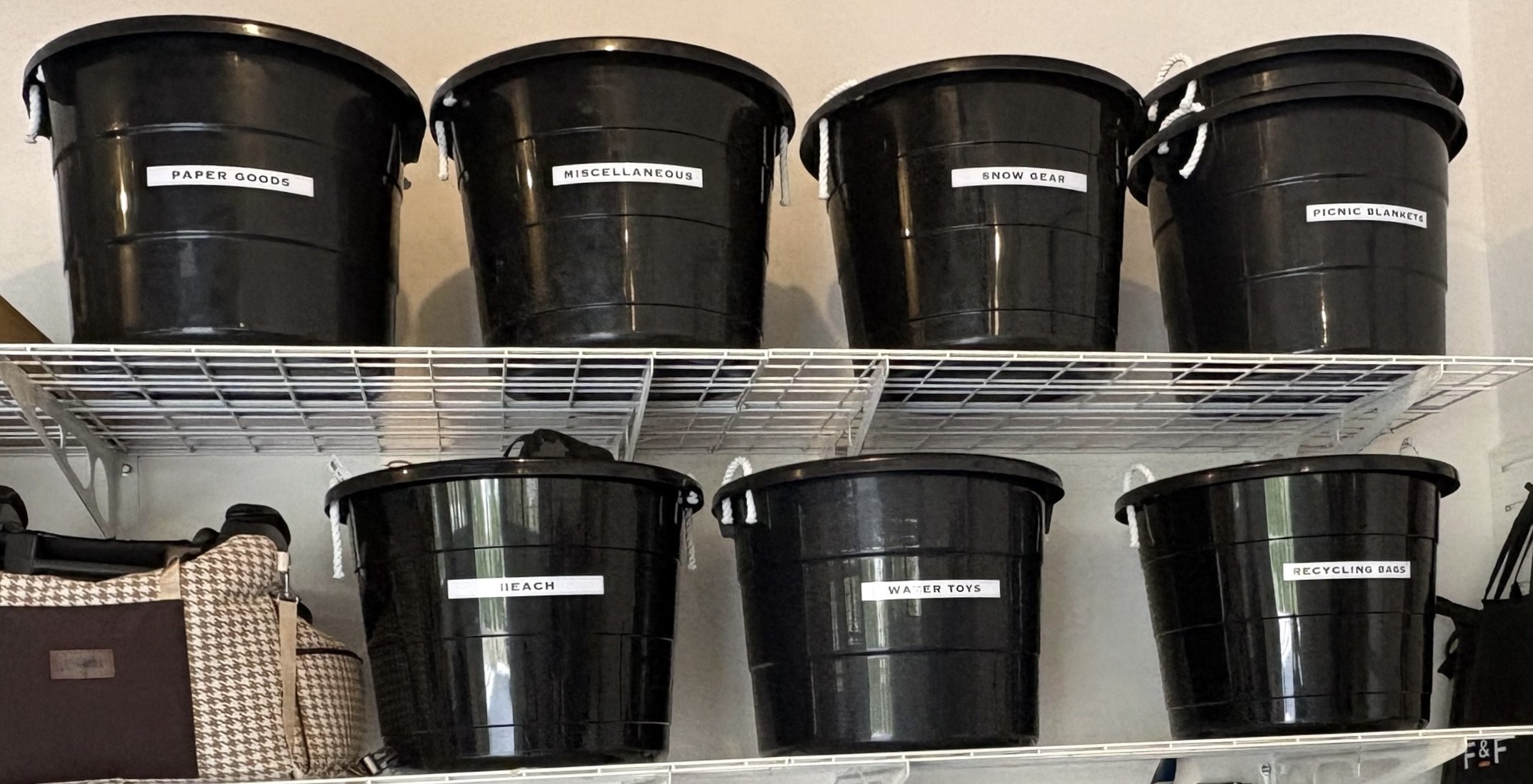
One bin per season or activity. When summer ends, the Beach bin goes up and Snow Gear comes down.
Here in New England, the garage has to handle two very different seasons.
When summer ends, the beach bin, pool toys, and water gear move up high or to the back. Snow gear, shovels, and ice melt come down front, where you can reach them on the first snowy morning. In the spring, you swap them back.
When each season has its own labeled bin, that switch takes minutes instead of an entire weekend.
Build in a Quick Reset
Even the best garage system will drift. Sports seasons change, new gear arrives, and things get dropped in a hurry.
That's completely normal. A good system isn't one that never gets messy. It's one that's easy to reset.
I suggest a quick fifteen-minute reset at the start of each season, and a family sweep whenever the garage starts to feel crowded. Everyone grabs their own things, puts them in their zone, and you're done. With back-to-school around the corner, you might pair it with the ideas in my back-to-school organizing post.
Frequently Asked Questions About Garage Organization
How long does it take to organize a garage?
For most two-car garages, plan on a full day for the sorting and a second session to set up zones, shelving, and labels. If you're installing a wall system or overhead racks, allow a bit more time. Breaking it into one wall at a time makes it feel much more manageable.
What's the best storage for sports equipment?
Open storage works best for sports gear. Wire baskets for balls, hooks for helmets, sticks, and rackets, and a low shelf or cubbies for bags and cleats. The fewer steps it takes to put something away, the more likely it is to get put away.
Should I use clear bins or solid bins in the garage?
Clear bins are great for things you use often, because you can see what's inside at a glance. Solid bins work well for seasonal items stored up high, as long as they're clearly labeled. Many garages use a mix of both.
How do I keep the garage from getting messy again?
Give every category a zone, keep the floor as clear as you can, and do a quick reset at the start of each season. When everyone knows where their things live, putting them back takes seconds instead of a whole Saturday.
Can you help with the whole project?
Yes. I help families sort, decide what to keep, plan zones, and set up storage that fits the way they actually use the space.
Let's Get the Car Back Inside
A garage doesn't have to look like a showroom. It just has to work for your family: a place to park, a place for every bike and bag, and a door you can walk through without tripping over a lacrosse stick.
If your garage has become the place where things go to be forgotten, and you're in Dover, Sherborn, Medfield, Needham, Wellesley, Newton, Natick, Westwood, or a nearby MetroWest town, I'd love to help. You can also read more about my home organizing services.
Here's to parking inside before the first snowflake.
Love,
Merrie