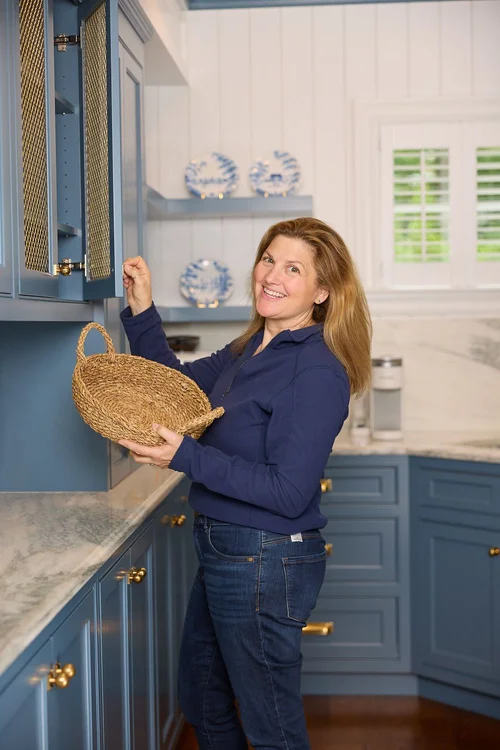


Paper doesn't need a fancy system. It just needs a place to go.
Most of the MetroWest homes I walk into have a paper pile somewhere. Usually it's on the kitchen counter, a mix of mail, school forms, receipts, and a few random pieces that keep getting passed from family member to family member. It's often one of the first things I get asked about on a consultation - how can I organize my paperwork?
My husband and I live in a small house, so there is just no place for paper to pile up. We keep as much as we can in digital form, sort the mail as soon as we bring it inside, and everything else goes into inboxes in our offices. It isn't fancy, but it works, and it's the same simple idea I bring to my clients' homes.
Paper arrives every single day, in all shapes and levels of importance, and there's rarely an obvious place for it to go, especially in tight quarters.
The good news is that a paperwork system doesn't need to be complicated. In fact, the simpler it is, the better it works - for all family members.
Why Paper Piles Up
Paper piles up for one simple reason: every piece requires a decision, and decisions take energy.
When you walk in the door with a stack of mail, your hands full and dinner to start, the easiest thing to do is set it down - wherever you happen to be standing. That isn't your failure. It's completely human.
The goal of a good paper system isn't to make you process every piece the moment it arrives. It's to give paper a place to land, and a simple routine for dealing with it before it takes over.
Stop It at the Door

Every bill you switch to paperless is one less piece of paper to find a home for.
The easiest paper to organize is the paper that never comes inside.
Keep a recycling bin near where you open the mail. Catalogs, flyers, and envelopes can go straight into it. If you have a shredder, keep it nearby too, for anything with personal information; if you’d prefer not to stand over a shredder each time you sort your mail, a shredder basket is a great midway solution.
A few other ways to slow the flow:
Switch bills and statements to paperless wherever it makes sense for you
Unsubscribe from catalogs you never read
Take a photo of the flyer for the school fundraiser and let the paper copy go
Here are some quick spots to help you stave off the junk mail:
OptOutPrescreen.com (free): This stops the pre-approved credit card and insurance offers. The online opt-out lasts five years, and you can make it permanent by mailing in a signed form. You can also call 1-888-5-OPT-OUT.
DMAchoice.org (small online fee, good for 10 years): This helps stop catalogs, magazine offers, donation requests, and retail promos.
CatalogChoice.org (free): For the catalogs that still sneak through. You can search their database of about 10,000 mailers and opt out one catalog at a time.
Valpak (free): Use the online form to stop the coupon envelopes.
Save.com (free): Use save.com/delivery-options to stop the Save coupon bundles - this lasts 5 years.
PaperKarma (app, $25 a year): Snap a photo of any piece of junk mail and it opts you out for you. Best for the stuff the big lists miss, like local businesses, charities, political mail, and mail addressed to whoever lived there before you.
One thing to note - none of these stop the flyers addressed to "Postal Customer," because there is no list behind those. For those, you have to ask each sender directly.
Every piece you stop at the door is a piece you never have to file.
Build a Simple Landing Spot
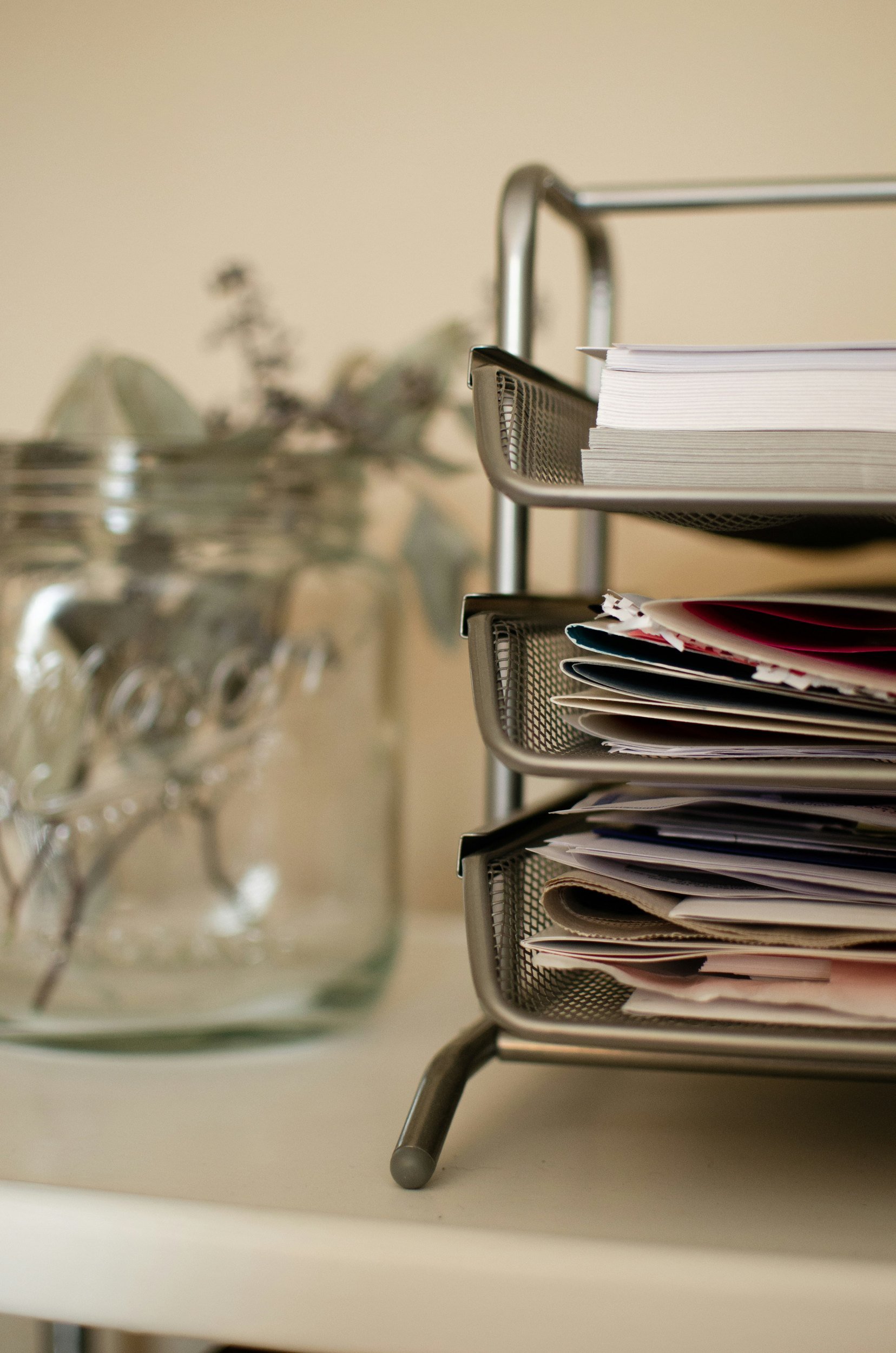
A few simple trays, one for each kind of paper. That's all a landing spot needs.
Every home needs one place where incoming paper lands. Just one.
For most families, that's somewhere near the kitchen, because that's where paper naturally ends up. Rather than fighting it, give it a proper home right there. A wall file, a small tray or basket, or a few upright folders on the counter work well.
I suggest starting with just three categories:
To Do: bills to pay, forms to sign, calls to make, and anything with a deadline
To File: paperwork you need to keep but don't need to act on
School: permission slips, schedules, and papers that come home in backpacks - you can label each one with your children’s names.
That's it. You can add a category if you truly need one, but three is often all it takes.
If you have been reading my blog for a while, you know I care much more about where things naturally land than where they're supposed to go. I wrote more about that idea in my post on ADHD-friendly home organization, and paper is a perfect example.
Keep What Needs Doing Visible
Paperwork with a deadline has a way of disappearing once it’s been hidden away.
That's why I like the To Do folder to be visible. A clear folder, a wall file, or a clipboard hanging near the calendar makes it much harder for a bill or a form to slip out of sight and out of mind.
A family calendar nearby helps too. When a permission slip comes home with a date on it, write the date on the calendar, sign the slip, and put it straight back in the backpack. Done. I’ve been loving the Skylight calendar - we have one in our house and we are obsessed.
Set Up a Simple Filing System
For the paperwork you need to keep, a simple filing system is all most households need. I like to keep categories broad and obvious:
Home: mortgage or lease, insurance, repairs, and warranties
Money: bank and investment statements, and tax documents
Medical: insurance information and important records
Car: registration, insurance, and service records
Kids: school records, activities, and important documents for each child
Important Documents: birth certificates, passports, wills, and other papers you can't easily replace
Keep irreplaceable documents somewhere safe, such as a fireproof box or small personal safe.
How long to keep financial and tax records depends on your situation, so it's always worth asking your accountant or financial advisor what they recommend for your family.
If you work from home, or your filing lives in a home office, my post on home office organization has more ideas for setting up a workspace that stays calm.
Make Room for Kids' Papers and Artwork
Kids bring home a ridiculous amount of paper. Worksheets, artwork, report cards, certificates, permission slips, and the occasional drawing that makes you laugh out loud.
You don't have to keep all of it, and you don't have to let all of it go either.
I suggest one bin or folder per child, per school year, large enough to accommodate the large volume of preschool and elementary school artwork. As papers come home, the special ones go into the bin. At the end of the year, look through it together and choose the favorites to keep. Some families photograph the rest, or turn the photos into a book.
With a new school year underway, my back-to-school organizing post has more ideas for keeping school-year chaos contained.
A Weekly Paper Reset
Here's the part that makes the whole system work: a short weekly reset.
Pick a time that fits your family - Sunday tends to be a great reset day, but generally pick a time when you can all work together. Set a timer for fifteen or twenty minutes and:
Clear the landing spot.
Pay bills or schedule payments.
Sign and return forms.
File anything in the To File folder.
Recycle or shred what you no longer need.
It doesn't have to be perfect. It just has to happen most weeks. Fifteen minutes on a Sunday is much easier than an entire Saturday spent digging through a mountain.
What If the Pile Is Already Huge?
If you're reading this with a box, a bag, or a whole dining room table of paper waiting for you, please don't feel discouraged. It's very common, and it's very fixable.
Start with today's mail and set up your system first. Then work backward through the older paper in small sessions, maybe one grocery bag at a time. Many towns hold community shredding days, so it can be helpful to set aside anything sensitive and bring it all at once.
And if you would rather not face it alone, that's exactly the kind of project I help with - I even handle the shredding and recycling for you.
Frequently Asked Questions About Organizing Paperwork at Home
Where is the best place to keep incoming mail?
Wherever it naturally lands. For most families, that's near the kitchen. Give it a proper home there with a basket or wall file, rather than trying to move it somewhere it never goes.
How long should I keep bills and statements?
It depends on the type of document and your situation. Your accountant or financial advisor is the best person to ask about tax and financial records. For everyday bills, many people keep them only until the next statement confirms payment.
Should I go completely paperless?
Only if it works for you. Paperless can reduce the pile, but some people remember things better on paper. A mix of both is perfectly fine.
What do I do with sentimental papers like cards and letters?
Give them their own box, separate from your everyday files. Choose the ones that mean the most to you, and store them somewhere safe and easy to revisit.
Can you help with a big paper backlog?
Yes. I help families sort through backlogs, set up systems that fit the way they live, and create a simple routine they can keep up with. I even take the recycling with me when I leave.
One Less Pile
Paper will never stop arriving. But with one place for it to land, a few simple categories, and a short weekly reset, it doesn't have to take over your kitchen counter, or your peace of mind.
If you're in Dover, Sherborn, Medfield, Needham, Wellesley, Newton, Natick, Westwood, or a nearby MetroWest town and the paper in your home feels overwhelming, I'd love to help you organize your paperwork. You can also read more about my home organizing services.
Here's to a clear counter and a calm Sunday night.
Love,
Merrie