

7 Home Organization Lessons I Learned as a Theater Prop Master
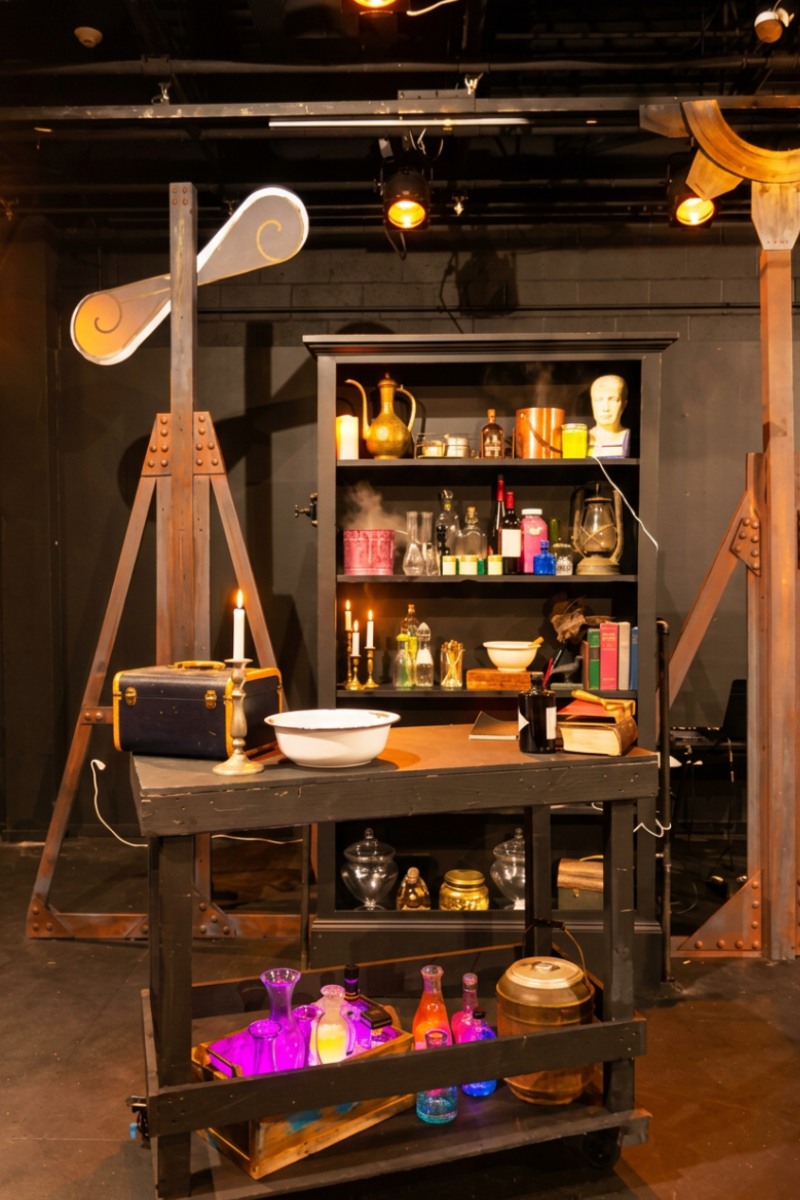
The set of Jekyll & Hyde - One of My Favorites
Before becoming a professional organizer, I moonlit as a prop master at the Music Theatre of Connecticut. I love a good scavenger hunt - my job was to hunt down every object the production needed, bring order to the prop closet, and label everything clearly enough that anyone could find it at four in the afternoon, when an actor was halfway into costume. My world was the hunting, the labeling, and the putting-it-all-back at the end of the run.
It was the best training I could have asked for.
The chaos a prop master manages backstage is not so different from the chaos in a busy household. New things arrive constantly. Multiple people use the same systems. There is never enough storage. Some objects matter deeply and some need to leave quietly. I sourced antique books, vintage bowls, apothecary jars, and market stands to bring stories to life on stage, and I learned, year after year, how to make systems hold up under real human use.
Years later, when I started The Tidy Girl Organizing and began working in homes across Needham, Wellesley, Newton, Dover, Westwood, and the surrounding MetroWest towns, I realized I was using the same playbook I had used backstage.
Here are the seven home organization lessons that came straight from theater life and that I rely on every day in my clients’ homes.
1. Every Object Has a Place and a Story
In theater, an object only earns its spot if it serves the story. A weathered trunk in a Tennessee Williams set is not just storage. It tells you something about the character who carries it. The same is true in your home, every item tells your story.
The bowl on your kitchen counter that catches keys, mail, and the kids’ AirPods is telling a story about how your family lands when they walk through the door. The closet full of half-finished art projects is telling a story about a five year old not ready to part with his masterpiece.
Good home organization starts by listening to the stories your things tell. Not every story deserves the prime real estate it is currently occupying. Some objects belong on display, some belong tucked away, and some have finished their run and are ready to be passed on. Before you buy a single bin or label, walk through one room and ask what story each pile is telling. The answer will tell you what to keep, what to relocate, and what to release.
This is especially important with sentimental items, which deserve more thought than a simple “does this bring me joy?”
2. Label Like Your System Will Be Used by Strangers
Backstage, my props were handled by professional actors, teaching artists, and kids as young as five. Although they were invested in putting things back where they belonged, so that they could have them ready for the next performance, the backstage area was often darkly lit and chaotic. The solution? Labels, labels, labels.
Sound familiar?
If your partner cannot find the rice, and your nine-year-old has no idea which bin holds the granola bars, the most beautiful pantry in the world is just a pretty mess waiting to happen. The system has to work for the actual humans in your house, not the aspirational ones.
A few things that help: pick the words your family actually uses. "Snacks" instead of "edibles." "Tax stuff" instead of "financial documents." "Undies" instead of whatever more dignified label you were considering. Label both the bin and the shelf it lives on, so the bin can travel and still find its way home. For younger kids, add a small picture next to the word. And for everyone's sake, pick a label style you actually like looking at. An ugly system gets no love.
Think of a good label as a small kindness to whoever opens that drawer next, including the version of you who is running fifteen minutes late on a Tuesday morning.
3. Shop Your Own Inventory First
I sourced props from Facebook Marketplace, thrift stores, HomeGoods, Buy Nothing groups, and dusty boxes of old theater supplies. But the very first thing I always did was dig through our own prop closet. Half of what I needed was already there, buried under something else.
Most homes are exactly the same.
Before you spend a dollar at The Container Store, go on a treasure hunt through your own kitchen, basement, linen closet, and garage. Gather every empty basket, glass jar, cute bowl, lazy susan, and drawer organizer you find and put them all in one spot. You will be genuinely surprised. Most families already own the majority of what they need to get organized. They just have not pulled it all together where they can see it.
When you do need to buy, buy after you have measured and have plan, not before. Buying first is one of the most common organizing mistake I see. The bins do not fit the shelf, the sizes are wrong, and the receipts pile up on the counter right next to the stuff you were trying to deal with.
4. Plan for the Real Show, Not the Imagined One
A director gives you the scene as it actually is, not as anyone wishes it were. If the character needs to pour a cup of tea and answer a phone, you make it work - you do not get to redesign the moment.
Your home is the same way.
The pantry that will actually function for your family is the one built around the meals you cook on a random Tuesday night when everyone is going in a different direction - not the meals you dream about while scrolling Instagram. The mudroom that will hold your mornings together is the one designed around the four pairs of cleats you actually own, not the streamlined two-pair version from your Pinterest board.
When I walk through a home with a client, I always ask about the unglamorous truth. Where do the lunch boxes actually land? How long does the laundry really sit before someone folds it? Do you even fold it? Where does the mail pile up, every single time, no matter how many times you have tried to fix it? The system has to fit that family, in this season, with these kids, on this schedule.
Aspirational organizing looks really pretty on Instagram. Realistic organizing is what you are still using six months from now.
5. Build the Backstage as Carefully as the Stage
The audience never sees the wings, but the wings are where the show holds together. If the props are not pre-set back there, the actor walks out empty-handed and the scene falls apart.
Your home has wings too. The linen closet, the junk drawer, the basement shelves, the cabinet under the bathroom sink, the corner of the garage with the holiday bins. These are the spaces where most home organization quietly unravels.
Give the backstage the same care you give the stage. A well-sorted linen closet will save you a few minutes on every laundry day, and those minutes add up fast when you are doing roughly nine loads a week. A junk drawer with a simple organizer tray means you can actually find the tape when you need it. A basement with clearly labeled holiday bins means you are not digging through six identical unlabeled boxes to find the Halloween decorations in October.
The visible parts of your home get the credit. The hidden parts decide whether that credit is deserved. If you would like a deeper look at the spaces that tend to need the most rebuilding, I write about whole house resets and what that process actually looks like.
6. Pre-Set Everything Before the Curtain Rises
In theater, pre-setting means placing every prop, costume piece, and scenery element exactly where it needs to be before the audience arrives. By the time the lights come up, the work is already done.
Family homes have curtains too. They rise at six-thirty in the morning when the first kid wakes up, and again at five-thirty in the evening when everyone comes home tired. The systems that survive those moments are the ones that are pre-set the night before.
Lay out the next day’s clothes for the youngest kids. Pack the school bags by the door. Put the coffee maker on a timer. Decide on dinner before you leave the kitchen at night, not while you are standing in the pantry at five forty-five.
Every decision you make in advance is a decision you do not have to make in the rush. Pre-setting is not about being a more organized person. It is about being a kinder one to yourself in the morning.
7. Every Show Ends With a Load-Out
In theater, the night a show closes is called strike. The set comes down, the costumes are stored, the props are returned or donated or repurposed, and the space empties out so it can become something new.
Your home needs strike nights too. Not dramatic ones. Just regular, rhythmic ones.
After the holidays, do a small strike. Donate the toys that did not survive the season, let go of the gifts that did not land, retire the wrapping paper that is hanging on by a thread. After back to school, strike again for the clothes that no longer fit and the supplies that no longer match the new grade. After every birthday, every move, every milestone, give yourself permission to release something before you accumulate something new.
The families I see thrive over the long term are not the ones who organize harder. They are the ones who release on a rhythm. Storage is finite. Time is finite. The things that earn another season have to compete for the spot.
Bringing the Backstage Home
You do not need to have run a prop closet to think like a prop master. You just need to start treating your home like the stage it already is. Listen to what your things are telling you. Build systems for the family you actually have. Shop what you already own first. Pre-set the chaos. And strike at the end of every chapter.
Your house will not look like a magazine, and it is not supposed to. But it will run like a show that knows exactly where everything is at four in the afternoon. And some days, that is everything.

I am a professional home organizer serving families in Dover, Sherborn, Medfield, Needham, Wellesley, Newton, Westwood, Natick, and the surrounding MetroWest towns. My approach is gentle, non-judgmental, and deeply respectful of the things that matter most to you. I specialize in whole house resets, kitchen and pantry organization, downsizing, and helping families create systems that hold up in real life. To learn more or book a free twenty-minute call, visit www.thetidygirl.com, or follow along on Instagram at @thetidygirlorganizing.
